History of Cigarette's 1964 - 1985
In 1964, First Surgeon General's report to link cigarette smoking to lung cancer.
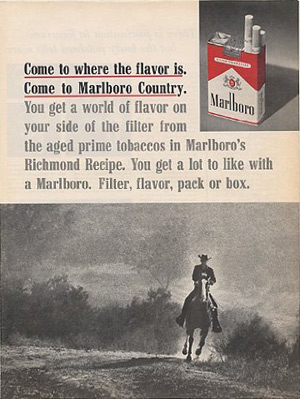
In 1964, Philip Morris comes out with 'Marlboro Country' ads. Sales start growing at 10% per year.
In 1965, United Kindom bans cigarette advertisments on television.
In 1966, Health warning labels on cigarette packages begin.
In 1968, Virginia Slims debut. Ads clearly target women.
In 1968, Philip Morris revenues top the $1 billion mark.
In 1969, Consumer advocate, Ralph Nader, asks for a ban on smoking on airlines. Pan Am creates first no smoking section.
In 1970, Top selling brand is Winston.
In 1970, The first 'Great American Smokeout' takes place.
In 1970, TWA becomes the first airline to have no smoking sections on all of its flights.
In 1970, President signs bill banning advertising of cigarettes on TV and radio.
In 1971, Ban on TV advertising goes into affect. Advertisers lose $220 million per year.
In 1972, Philip Morris revenues go past $2 billion mark.
In 1972, Marlboro becomes the best selling brand.
In 1972, Marlboro Lights hit the market.
In 1973, Arizona passes first laws prohibiting smoking in public places.
In 1973, US government mandate nonsmoking area on all airlines.
In 1975, US military halts the distribution of free cigarettes in K-rations and C-rations.
In 1975, Marlboros overtake Winston as the best selling brand in the USA.
In 1976, Philip Morris takes in over $4 billion in sales.
In 1979, Philip Morris sales top $8 billion.
In 1980, Philip Morris sales over $10 billion.
In 1981, Cigarette consumption peaks.
In 1981, Insurance companies begin selling life insurance to nonsmokers at a reduced rate.
In 1983, In San Francisco, law banning smoking in private workplaces is passed.
In 1985, Philip Morris buys General Foods. Now owns 7-up and Miller Brewing Company.